Monday, October 09, 2006

Sign of Weakness...

The Financial Times carries an analysis column of North Korea's apparent nuclear test earlier today (last night, our time). Interestingly, the FT concludes the North Korea test is a sign of weakness. Excerpts:

The test does imply, however, that the regime has enough weapons spare not to worry about losing one of them by testing. This probably means that it has more than the one or two weapons it was assessed to have by US intelligence a few years ago, and may have as many as 10.

Yet the test is more a sign of weakness than of strength. Though analysing what goes on at the top of the isolationist regime is difficult, some analysts have speculated that Kim Jong Il is under internal pressure. The country is plagued by food shortages – exacerbated by a drop in food aid from China and other countries – and has seen economic sanctions erode its ability to earn foreign exchange.

It also contains this biting analysis of the change in US policy under the Bush administration:

North Korea’s probable test of a nuclear weapon on Monday has triggered the second nuclear crisis in 13 years on the Korean peninsula.

In 1993, North Korea announced it would pull out of the Nuclear Non-Proliferation Treaty, leaving it free to divert nuclear material from its energy reactors to make a nuclear weapon and setting off a round of crisis diplomacy led by the Clinton administration. The result was the so-called agreed framework, which – in return for supplies of fuel oil to North Korea – froze most aspects of Pyongyang’s nuclear weapons programme for the rest of the decade.

The agreed framework was in effect consigned to history when the Bush administration came to power in 2001. The new administration argued that although the road to a plutonium-based nuclear bomb had been frozen, the North Koreans were cheating by attempting to develop a uranium-based bomb that was not explicitly addressed by the agreement.

That five years later, North Korea has tested a nuclear weapon will be widely interpreted as a sign of the failure of the tougher approach favoured by the Bush team.

Back in 2002, Bush stood before an audience in Cincinnati and declared that there was an "Axis of Evil" consisting of Iraq, Iran, and North Korea.

Isn't it a shame that he chose to invade the one nation-state on that list that actually DID NOT have a nuclear program?

Sunday, October 08, 2006

Sunday Reading...

Several interesting stories caught my attention today - I thought I'd just link to them in case anyone may be interested:

Houston Chronicle:
The fight for The Woodlands - As Houston sets its sights northward, residents of the master-planned community are starting to weigh their options
Pope Urges Couples to Resist Modern Pressures - Pope Benedict XVI urged couples to resist modern cultural currents inspired only by a search for happiness and pleasure


New York Times:
As Exemptions Grow, Religion Outweighs Regulation - Religious organizations enjoy an abundance of exemptions from regulations and taxes, and the number is multiplying rapidly
Rumsfeld Shift Lets Army Seek Larger Budget - The defense secretary is allowing the Army to approach White House budget officials by itself to argue for substantial increases in resources


MSNBC:
Off Message - Foley email scandal could tumble the GOP
For the Faithful, A Trying Time - Evangelicals fed up with GOP?
The Return of the Grim Speaker - Cheney is back with doom speech casting Democrats as danger to security

Thursday, October 05, 2006

No Responsibility...

It is often said these days that no one is willing to take responsibility anymore. As a general rule, that may well be true. Yet, it is difficult to understand how people are supposed to learn to take responsibility when all they see is their leaders ducking responsibility and blaming others...anyone else, no matter how implausible, and no matter how responsible those leaders are.

Where does the "buck" stop anymore? Harry Truman is famous for the statement - The buck stops here. The responsibility lies with me, and I'm man enough to take it. Oh, how we need leadership like that again these days.

I've always been a big believer than in business - and in life - you will always go far if you are willing to take responsibility for negatives, and pass the praise on to others for positives. It is scary - sure. But down deep, people respect those who are willing to step up, take responsibility for a situation, and with a steady jaw, accept the consequences of those actions. (The flip side is true as well, people always respect those who are willing to give credit to their co-workers and associates for triumphs, and it also engenders the respect and loyalty of those receiving the praise.) That's what people want. Accept your consequences, and then succeed anyway. That's how respect is earned.

And then there are people who respond like this: Hastert vows to hold on

In an interview with the Tribune on Wednesday night, Hastert said he had no thoughts of resigning and he blamed ABC News and Democratic operatives for the mushrooming scandal that threatens his tenure as speaker and Republicans' hold on power in the House.

Hastert refuses to take any responsibility. Instead of a concern for the people impacted by this scandal, instead of a concern for public perception, instead of a concern for the leadership of the House of Representatives...Hastert is concerned only about his tenure as speaker and Republican power. He's willing to blame Democrats (whom he purposefully kept the information from) and the media who broke this story. Pathetic and sad.

"I think that [resignation] is exactly what our opponents would like to have happen--that I'd fold my tent and others would fold our tent and they would sweep the House."

The election is more important than principal.

He went on to suggest that operatives aligned with former President Bill Clinton knew about the allegations and were perhaps behind the disclosures in the closing weeks before the Nov. 7 midterm elections, but he offered no hard proof."

All I know is what I hear and what I see," the speaker said. "I saw Bill Clinton's adviser, Richard Morris, was saying these guys knew about this all along. If somebody had this info, when they had it, we could have dealt with it then."

Even this is Clinton's fault...not the Republican leadership's who "only" covered up the story and refused to investigate the situation. [Here is where we all roll our eyes.]

In a day of rapidly unfolding developments, former Foley chief of staff Kirk Fordham charged that he had alerted the speaker's chief of staff to Foley's behavior well before a former page complained last year of inappropriate e-mails from the Florida Republican congressman. Fordham resigned earlier in the day as chief of staff to Rep. Thomas Reynolds (R-N.Y.), the GOP national congressional campaign chairman; Reynolds was among those involved in discussions of the page's complaint about Foley.

Fordham's lawyer, Timothy Heaphy, said Fordham warned Hastert chief of staff Scott Palmer at least two years ago about inappropriate behavior between Foley and pages."Palmer subsequently had a meeting with Foley and Foley mentioned it to Fordham," Heaphy said.

Fordham said he was unsure when the meeting with Palmer occurred, but Heaphy said it was between 2002 and 2004, when Fordham was Foley's chief of staff.

Hastert's office immediately denied the charge from Fordham, and the speaker challenged Fordham's credibility directly.

I admit that I might be wrong, but I feel strongly that Americans would have much more respect for Congress and their leaders if instead of pointing fingers, they would bear the responsibilities of their position. Leadership is not easy, but it's desperately needed.

[Edit: the blaming continues. MSNBC reports that Hastert will speak today and blame Democrats. Of course, his position is untenable. The ABC reporter who broke the story has gone on record as saying his information came from a Republican staffer, and The Hill is reporting that Longtime Republican was source of Emails. The cover-up continues.]

Hedge fund problems...

Weak Results Dim Hedge Funds’ Luster

For years now, Hedge Funds have been the darlings of Wall Street. Hedge funds are sophisiticated investments for institutions like pension funds and endowments and the wealthy. They are currently unregulated by the SEC because they are only open to a tiny minority of investors who: a) have a high level of sophistication and intelligence about investments, and b) have very large amounts of money to invest. (Thus, the "average" investor in a Hedge Fund may well be institutions like pensions and endowments mentioned above.) Part of the idea of Hedge Funds are they since they are not regulated, they do not carry the administrative costs of other investments, therefore they should consistently out-perform traditional stocks and mutual funds.

The SEC has in the past tried to get some control over these investment instruments, but have been halted in their attempts. But, as the article linked above discusses, the performance of some of the funds has not been stellar, and may provide an opportunity for the SEC to get back involved.
Recently, a well-regarded fund, Amaranth Advisors of Greenwich, Conn., made a wrong-way bet in the energy markets and lost more than $6 billion in a week. It will dispose of its remaining assets. Even the flagship hedge fund run by Goldman Sachs, whose trading prowess has few peers on Wall Street, fell 10 percent in August. A fund at Vega Asset Management, once among the 10 largest hedge funds in the world, fell more than 11.5 percent in September, leaving it down 17.5 percent for the year. Its assets, which once topped $12 billion, are now $2 billion to $3 billion, a person close to the fund said.

Returns for many hedge funds, which are supposed to be the market beaters, have paled in comparison with stocks. Hedge Fund Research’s weighted composite index is up 7.23 percent through September, according to a preliminary estimate, compared with the Standard & Poor’s 500-stock index, which, with dividends, has a total return of 12.4 percent over the same period.
The rise of hedge funds’ fame and fortune happened quickly. In 2000, the stock market began to slide, and almost overnight, a band of obscure money managers became the new millennium’s masters of the universe. Soon, huge buckets of money rained on these stars — $99 billion flooded into hedge funds in 2002, according to Hedge Fund Research. Since the beginning of 2001, nearly 7,000 hedge funds have been started.

With eye-popping compensation — the top manager took home $1.5 billion last year — hedge-fund performance, and the pay derived from it, redefined everything from job prestige on Wall Street to the price for art and real estate.

So while there has been nothing like a sweeping shakeout in the business or a market crisis like the near collapse of Long-Term Capital Management in 1998, some hedge funds, including some of the high-profile “safe” names, have failed to show any Midas-like magic.

Many of the big-name debuts of 2004, 2005 and even 2006 have produced lackluster results.
Hedge funds are Darwinian by nature: when returns are good, money flows in and when they are bad, investors scramble to get their money out as soon as possible.

So the spigot of new money into hedge funds has run hot and cold. After tapering off in 2005, with $46.9 billion flowing in, there has been a revival this year, with more than $66 billion poured into hedge funds in the first half of 2006 alone. That flood of money is not likely to end even amid the recent stumbles by hedge funds.
....
Pension funds, seeking to make up for years of being underfunded, have
increasingly turned to hedge funds. Many funds that cater to such institutions boast they can deliver consistent medium-range returns — 8 to 12 percent — that permit institutions to better manage their liabilities.

And endowments, which were among the earliest adopters of hedge fund investing, do not appear to be backing away.
....
Indeed, the changes that are likely to come in the wake of Amaranth will be in the form of increased vigilance by investors. Managers of funds of funds and consultants say investors may now temporarily delay their investments in hedge funds as they try to negotiate better terms to redeem their funds in the case of a crisis. And there may be calls from investors for greater disclosure, especially regarding how the funds are using leverage and derivatives.
In days when Hedge Funds are high-flying, it makes sense that it would be difficult for the SEC to be able to garner support for registration and disclosure within such funds. But, when performance is not so great - and especially when funds are losing $6BB in a week - the environment may be better to put some sort of rational registration requirements on the funds.

Tuesday, October 03, 2006

A link...

If you don't live in Tennessee it won't be as relevant, but anyone looking for a public servant to support should click here:

Harold Ford Jr. for Tennessee Senate

More finger pointing...

Rice Confirms Meeting with Tenet on U.S. Threat

It turns out Condi Rice "misrepresented" the truth over the weekend when she said she didn't remember meeting with George Tenet TWO MONTHS before the September 11th terrorist attacks, where he and the CIA disclosed to her that they had reports of an imminent terrorist attack.

But, even in confirming the meeting - she points fingers:
Secretary of State Condoleezza Rice did receive a CIA briefing about terror threats just about two months before the Sept. 11 attacks, but the information was not new, her chief spokesman said.

In doing so, [Rice's spokesperson] confirmed a meeting - on July 10, 2001 - that [Rice] had said repeatedly she could not specifically recall. ...

A new book by reporter Bob Woodward of Watergate fame describes the White House meeting as an emergency wakeup call that Rice had brushed off. Rice was President Bush's national security adviser at the time and was promoted to the top diplomatic job last year.

Although spokesmen for the State Department and the National Security Council indicated Sunday that such a meeting had taken place, Rice was still saying Monday that she was not sure about it. She said she would have remembered the sort of forceful warning the book claims was conveyed there.

Woodward's book "State of Denial'' recounts the meeting among then-CIA Director George Tenet, Rice and the CIA's top counterterror officer. The book said the session stood out in the minds of the CIA officials as the "starkest warning they had given the White House'' on al-Qaida leader Osama bin Laden and his network.

McCormack said that after the meting, Rice had asked that the same material be given to Secretary of Defense Donald H. Rumsfeld and then-Attorney General John Ashcroft.

So, her response is blame Rumsfeld and Ashcroft. But will that fly?
Meanwhile, Ashcroft said Monday that he should have been notified of any such report dealing with a pending attack on the United States. "It just occurred to me how disappointing it was that they didn't come to me with this type of information,'' he said in an interview with The Associated Press.

Whoops! It's like cannibalism on the right...

Resign, Mr. Speaker...

The nation's most conservative newspaper, The Washington Times, carries an editorial today entitled: Resign, Mr. Speaker.

Excerpts:

The evidence was strong enough long enough ago that the speaker should have believed Mr. Foley of his committee responsibilities contingent on a full investigation to learn what had taken place, whether any laws had been violated and what action, up to and including prosecution, were warranted by the facts. This never happened.

On Friday, Mr. Hastert dissembled, to put it charitably, before conceding that he, too, learned about the e-mail messages sometime earlier this year. Late yesterday afternoon, Mr. Hastert insisted that he learned of the most flagrant instant-message exchange from 2003 only last Friday, when it was reported by ABC News. This is irrelevant. The original e-mail messages were warning enough that a predator -- and, incredibly, the co-chairman of the House Caucus on Missing and Exploited Children -- could be prowling the halls of Congress. The matter wasn't pursued aggressively. It was barely pursued at all. Moreover, all available evidence suggests that the Republican leadership did not share anything related to this matter with any Democrat.

House Speaker Dennis Hastert must do the only right thing, and resign his speakership at once. Either he was grossly negligent for not taking the red flags fully into account and ordering a swift investigation, for not even remembering the order of events leading up to last week's revelations -- or he deliberately looked the other way in hopes that a brewing scandal would simply blow away. He gave phony answers Friday to the old and ever-relevant questions of what did he know and when did he know it? Mr. Hastert has forfeited the confidence of the public and his party, and he cannot preside over the necessary coming investigation, an investigation that must examine his own inept performance.


In addition, the finger-pointing is getting really, really, really nasty. Even by Republican standards:

Straining to hold the party together five weeks from Election Day amid unfolding revelations about the case, Mr. Hastert and his leadership team held a conference call with House Republicans on Monday night and heard blunt advice and criticism from participants who pressed for further action to reassure voters.
“This is a political problem, and we need to step up and do something dramatic,” Representative Ray LaHood of Illinois said afterward, adding that he had proposed abolishing the Congressional page program.


At the White House, Tony Snow, President Bush’s press secretary, initially characterized the scandal as “naughty e-mails,” drawing a blistering response from Democrats who said his words suggested that Republicans did not understand the gravity of the situation.


"There wasn't much there other than a friendly inquiry," Hastert said of the 2005 message from Foley, described as "sick" by the boy.


Hastert said he does not recall being told last spring by Rep. Tom Reynolds, the House GOP campaign chairman, about the questionable e-mail, but he doesn't dispute Reynolds' account.
"I don't think I went wrong at all," Reynolds said at a Monday evening news conference in his western New York district, surrounding himself with about 30 children and about as many parents. "I don't know what else I could have done."


Majority Leader John Boehner said the speaker had assured him months ago the matter had been taken care of. "It's in his corner. It's his responsibility,"
Boehner, R-Ohio, said in an interview on radio station WLW in Cincinnati.


Ugly.

Monday, October 02, 2006

Midterm Predictions for the Midterms...

Okay - so it's not exactly early predictions for the coming November midterm elections, but it's not last minute predictions either, so I'm calling it my "Midterm Predictions for the Midterms."

Early in the summer there was a lot of excitement in Democratic circles that during the 2006 Midterms they would take back both houses of Congress. That excitement was quieted a bit during September, when the White House used the 5th Anniversary of the September 11th terrorist attacks to do some campaigning, but it seems as if the Democrats are getting energized again.

The latest Mason-Dixon/MSNBC polls for contested Senate races would seem to justify Democratic excitement. As of last Friday (29-Sept.) the races stood as follows:

Maryland (Democrat held):
Cardin (D) - 47
Steele (R) - 41

Missouri (Republican held):
Talent (R) (i) - 43
McCaskill (D) - 43

Montana (Republican held):
Tester (D) - 47
Burns (R) (i) - 40

New Jersey (Democrat held):
Menendez (D) - 44
Kean (R) - 41

Ohio (Republican held):
Brown (D) - 45
DeWine (R) (i) - 43

Pennsylvania (Republican held):
Casey (D) - 49
Santorum (R) (i) - 40

Rhode Island (Republican held):
Whitehouse (D) - 42
Chafee (R) (i) - 41

Tennessee (Republican held):
Ford (D) - 43 ... (Rasmussen polls indicate - 48)
Corker (R) - 42 ... (Rasmussen polls indicate - 43)

Virginia (Republican held):
Allen (R) (i) - 43 ... (Rasmussen polls indicate - 49)
Webb (D) - 43 ... (Rasmussen polls indicate - 43)

Washington (Democrat held):
Cantwell (D) (i) - 50
McGavick (R) - 40

These numbers seem to indicate pretty good news for the Democrats and their hope to gain control of the Senate (they need to pick up 6 seats). They look pretty solid to win back thier incumbancies (MD, NJ, WA) although New Jersey seems to still be up in the air. In addition, of the seven Republican seats they are challenging in (which by the way does not include Connecticut, because although it is de facto Republican (Lieberman), it is relatively certain that the incumbent will defeat Ned Lamont in his run as an independant) they are leading in five and tied in two. Of course, five will not take the Senate. But even beyond that, these numbers should not be overly encouraging to Democrats.

What is one of the most striking and consistent things in the numbers above? The Democrats - even the ones in the lead - don't have 50% of the vote yet. Hmm... In my opinion, that does not bode well in the seven Republican controlled seats up for grabs. My guesses right now are that the Democrats will retain control of the three competitive seats they currently hold (MD, NJ, and WA). But, of the other seven seats, I am guessing that the Democrats are only able to pick up two of those seats (MT and TN), and those are both very close calls. Burns is an intrenched incumbent in Montana, and although Harold Ford Jr. is a TREMENDOUS candidate in Tennessee, that state has been voting Republican state-wide for some time now, and a Ford victory will still be a great upset.

So, what do I see in the other races? I see an electorate that is disgusted and disenchanted with the Republican leadership and the Bush Administration. Such antipathy is reflected in the poll numbers. But when election day rolls around, Republicans run superb GOTV campaigns, and that will make a difference. In Missouri, 14% are undecided, and if they go vote, they are more likely to vote for an incumbent. The exception may be Santorum in Pennsylvania. Casey is almost running at 50%, and there is a tight race with a Democrat emerging in the House district in the Philadelphia suburbs. If Santorum cannot win those suburbs, he cannot win Pennsylvania.

Overall, I'm going to guess as of today that the Democrats gain a grand total of TWO seats in the Senate (if they hold NJ) - and the Republicans and the media declares it a Grand Victory for the Republicans.


Over in the House, many have considered it a foregone conclusion since late spring that the Democrats would take back the house, based in large part on the Mason-Dixon polling which shows the Democrats having a BIG lead in the generic congressional ballot test, 48% - 43%, over the Republicans (see link above). The Democrats need to pick up 16 seats in the House to gain control.

The Cook Political Report (as of 20-Sept) lists 74 seats as potentially in play (55 held by Republicans and 19 by Democrats). BUT, of the 19 seats that Cook has listed as "toss-ups," 15 of those districts tend to lean Republican. Again, I think that in the House, as in the Senate, the Democrats are likely to gain seats, but I just don't think they will get the full 16 seats needs to gain the majority. Republicans will spin this loss as a win due to such low expectations.

Of course, all this could still change. The recent shocking scandal surrounding Florida Republican Foley, the questions surrounding why the Republican leadership never took action, and the White House characterizing the scandal as "simply naughty e-mails" and "overly friendly." If the Republican leadership and White House continue to respond like this, it could actally affect the midterms.


My Midterm Predictions for the Midterms are that the Republicans will retain both Houses of Congress. I just think that Democrats are being overly optimistic - Republicans strengths in the Districts in question, and in the GOTV operations will make the ultimate difference on November 7.

[Edit: I thought I would include my 26-Oct-2004 prediction post for the 2004 Presidential Election:

Swing States

As a quick recap, at that time I predicted Bush to defeat Kerry by an electoral college vote of 271 to 267. I was off, but only by a bit, the actual result was a Bush victory of 286 to 251 (I picked Ohio for Kerry).]

Saturday, September 30, 2006

Banana Republics...

My wife and I recently had the opportunity to spend a few days in St. Lucia, an island in the Caribbean. It was a really nice trip that had two unexpected highlights. I was hoping the trip would be a time of pure rest and relaxation – but it turned out that the best parts were big learning experiences.

First, along with another couple, we rented a cab to drive us around the (small) island one day. (St. Lucia has a population of approximately 160,000 and is approximately 5 miles East/West by 25 miles North/South.) We ended up spending about 5 hours in that cab…which was far too long…but it was a great learning experience about St. Lucia. Admittedly, we stopped at a number of tourist traps where cheap “souvenirs” were sold at us. But in driving through the cities, observing the people, and asking questions to and talking with the cab driver Clem, we were able to learn quite a bit about the island – a true banana republic, whose primary industries are tourism, banana plantations, and fishing.

One thing we observed on our trip was so many people just standing around all over the island. At one point, as we were driving through the capital city of Castries for the second time that day, one of our friends asked the driver what the unemployment rate on the island was. He told us that the “official rate is about 15%.” I thought that was interesting – the “official rate.” It wasn’t explained, just left to hang out there. We also asked what gas prices were like in St. Lucia. Clem told us that currently prices are around $4.50 USD. But, he said, that’s actually a little lower than average, because they are in the midst of an election, so the ruling government reduced prices some to engender positive reaction from the electorate.

The next night we attended a dinner where I had the opportunity to sit next to a local lawyer who is also involved with some government committees on the island. I spent almost two hours grilling him (at some point I let up to let him eat his food!!) about the systems of laws, the education system, government, politics, economy, and anything else I could think of about the island. It was a great learning opportunity. St. Lucia is in the midst of two political events – an election cycle (which comes once every 5 years) and a constitutional review (in which their entire constitution is being reviewed for change and/or update). I was able to learn a tremendous amount about this island we were visiting (and the Caribbean in general – we spent some time discussing the potential for a Common Caribbean Market – similar to the EU – which would enable each of the small islands of the West Indies to band together to present a larger, more robust Common Market). During our conversation, I remembered Clem’s statement about the “official” unemployment rate. I asked my new friend about that. He told me that indeed the government’s official unemployment rate was around 15% - but that number was very deceiving, because they essentially cut out “self-employed” – or more accurately, “don’t want to be employed” from that number. Folks who just subside by doing odd jobs, small-time fishing, etc. are simply not included. He said that it’s possible that the actual unemployment rate stretches far higher, maybe to close to 50%. It’s just all in the way you calculate it. My friend also confirmed Clem’s assumption about gas prices, that the government had indeed lowered prices a bit for political purposes.

Of course, that got me thinking about the good old USA. Over the course of the past four years, the Bush Administration Labor Department has systematically redefined “unemployment” for purposes of the “official” unemployment rates. In this way, they can compare their “rate” with historical rates, and argue that their number doesn’t look so bad. Of course, reasoning people understand that such a comparison is the same as comparing apples and oranges – the rates are not comparing a similar population, and any such comparison is therefore invalid.

In addition, a recent Gallup poll found that a full 42% of Americans agreed with the statement that the Bush administration “deliberately manipulated the price of gasoline so that it would decrease before this fall’s elections.” Wow. Almost half of our nation thinks that the Republican party is playing politics at the pump. I think that the possibility that this is really occurring is rather remote – but it is clear that a large portion of America believes it. Even if not true – this is a damning indictment of the public perception of the Republican party and the Bush Administration – and just how corrupt the American people believe they are.

Amazing. Now, which is the banana republic???

Friday, September 29, 2006

Sad day for Liberty...

Senate Approves Broad New Rules to Try Detainees

It would make illegal several broadly defined abuses of detainees, while leaving it to the president to establish specific permissible interrogation techniques. And it would strip detainees of a habeas corpus right to challenge their detentions in court.

“I believe there can be no mercy for those who perpetrated the crimes of 9/11,” Senator Hillary Rodham Clinton, Democrat of New York, said. “But in the process of accomplishing what I believe is essential for our security, we must hold onto our values and set an example that we can point to with pride, not shame.”

Even some Republicans who voted for the bill said they expected the Supreme Court to strike down the legislation because of the provision barring court detainees’ challenges, an outcome that would send the legislation right back to Congress.

“We should have done it right, because we’re going to have to do it again,” said Senator Gordon H. Smith, Republican of Oregon, who voted to strike the provision and yet supported the bill. The measure would broaden the definition of enemy combatants beyond the traditional definition used in wartime, to include noncitizens living legally in the United States as well as those in foreign countries and anyone determined to be an enemy combatant under criteria defined by the president or secretary of defense.

It would strip at Guantánamo detainees of the habeas right to challenge their detention in court, relying instead on procedures known as combatant status review trials. Those trials have looser rules of evidence than the courts.

It would allow of evidence seized in this country or abroad without a search warrant to be admitted in trials.

The bill would also bar the admission of evidence obtained by cruel and inhuman treatment, except any obtained before Dec. 30, 2005, when Congress enacted the Detainee Treatment Act, that a judge declares reliable and probative.

Democrats said the date was conveniently set after the worst abuses at Abu Ghraib and Guantánamo.

On a completely unrelated note, the Bill of Rights to the United States Consitution will be 215 years old on December 15 of this year.

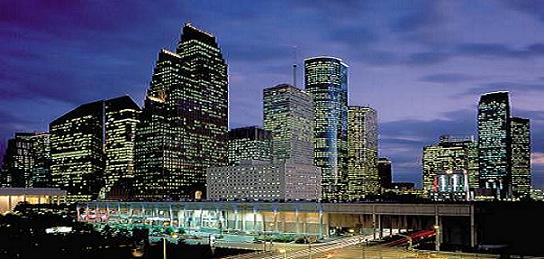
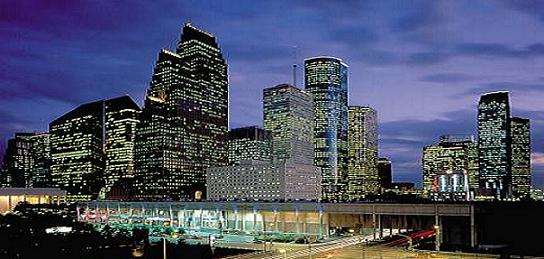
Houston Skyline Photo...


Houston

Houston

Trends in Global Terrorism...

A stark assessment of terrorism trends by American intelligence agencies has found that the American invasion and occupation of Iraq has helped spawn a new generation of Islamic radicalism and that the overall terrorist threat has grown since the Sept. 11 attacks.

The National Intelligence Estimate represents the consensus view of 16 different United States intelligence organizations on a particular intelligence issue/are, and it is generally compiled only every 5 years or so.

The Washington Post has linked to the Declassified Key Judgments of the National Intelligence Estimate Trends in Global Terrorism: Implications for the United States dated April 2006, which is a somewhat startling document. Some excerpts:

The Iraq conflict has become the cause celebre for jihadists, breeding a deep resentment of US involvement in the Muslim world and cultivating supporters for the global jihadist movement. ...

We assess that the underlying factors fueling the spread of the movement outweigh its vulnerabilities and are likely to do so for the duration of the timeframe of this Estimate.

• Four underlying factors are fueling the spread of the jihadist movement:

(1) Entrenched grievances, such as corruption, injustice, and fear of Western domination, leading to anger, humiliation, and a sense of powerlessness;

(2) the Iraq jihad;

(3) the slow pace of real and sustained economic, social, and political reforms in many Muslim majority nations; and

(4) pervasive anti-US sentiment among most Muslims all of which jihadists exploit.

The Washington Post also noted that:

The overall estimate is bleak, with minor notes of optimism. It depicts a movement that is likely to grow more quickly than the West's ability to counter it over the next five years, as the Iraq war continues to breed "deep resentment" throughout the Muslim world, shaping a new generation of terrorist leaders and cultivating new supporters for their ideology.

In describing Iraq as "the 'cause celebre' for jihadists," the document judges that real and perceived insurgent successes there will "inspire more fighters to continue the struggle elsewhere," while losses would have the opposite effect.

"[T]he underlying factors fueling the spread of the movement outweigh its vulnerabilities and are likely to do so for the duration of the timeframe of this estimate," the report notes. An intelligence official who was not authorized to speak on the record said the time frame is until early 2011.

The intelligence community has had its own problems with the attention the document is now receiving. Several active and retired intelligence officials stressed that the judgments were nothing new and followed a series of similar assessments made since early 2003 about the impact of the Iraq war on global terrorism.

"This is very much mainstream stuff," said Paul R. Pillar, the CIA's national intelligence officer for the Near East and South Asia from 2000 to 2005. "There are no surprises."

Several active and retired intelligence officials, who were not authorized to speak on behalf of the intelligence community, expressed resentment at the administration's decision to have Negroponte issue the first official reaction to the weekend reports. They said he should not have become involved in what quickly became a political battle.

Complete consensus from the US intelligence communities. Yet even just this week, President Bush said once again that the invasion and occupation of Iraq was the right thing and the critical front in the war on terror. It appears that only in the 'bush-reality' of this Bush Administration is the truth about Iraq not crystal clear.

It is also clear that the devastating that the horrendous miscalculations of the Bush Administration are making the world, and the United States much more dangerous.


Thursday, September 14, 2006

Leadership...

Powell opposes Bush

Selected quotes:

"The world is beginning to doubt the moral basis of our fight against terrorism," said Powell, who served under Bush and is a former chairman of the Joint Chiefs of Staff. "To redefine Common Article 3 would add to those doubts. Furthermore, it would put our own troops at risk."

At nearly the same time Bush met with House Republicans, Sen. John Warner, R-Va., chairman of the Senate Armed Services Committee, on Thursday was asking his panel to finish an alternative to the White House plan to prosecute terror suspects and redefine acts that constitute war crimes.

The White House today said the alternate approach was unacceptable because it would force the CIA to end a program of using forceful interrogation methods with suspected terrorists.


It's time someone stood up to the hubris of the Bush administration.

Wednesday, September 13, 2006

Reality - According to Bush...

"Thomas Jefferson once said: 'Of course the people don't want war. But the people can be brought to the bidding of their leader. All you have to do is tell them they're being attacked and denounce the pacifists for somehow a lack of patriotism and exposing the country to danger. It works the same in any country.' I think that was Jefferson. Oh wait. That was Hermann Goering. Shoot." --Jon Stewart, hosting the Peabody Awards


Last Friday, the Senate Intelligence Committee released an exhaustive report confirming that there were no pre-invasion ties between Iraq and Al Quaeda:

The report also poured cold water on concerns expressed in intelligence estimates of cooperation between Hussein and Al Qaeda.

"Postwar findings indicate that Saddam Hussein was distrustful of Al Qaeda and viewed Islamic extremists as a threat to his regime, refusing all requests from Al Qaeda to provide material or operational support," the committee said.

In a separate report, the committee blamed the Iraqi National Congress for much of the faulty intelligence. Chalabi, the group's head, was thought to aspire to lead Iraq if Hussein could be overthrown.

"The Iraqi National Congress attempted to influence United States policy on Iraq by providing false information through defectors directed at convincing the United States that Iraq possessed weapons of mass destruction and had links to terrorists," the committee concluded.


Yet, just this week, the Bush administration, through Vice-president Cheney and Secretary of State Condolezza Rice, continued to argue that there were close ties between Iraq, Sadaam Hussein, and Al Quaeda. Even the President, in addressing the nation on the 5th Anniversary of the terrorist attacks of Sept. 11th, brought up the occupation of Iraq in a thinly veiled attempt to link the terrorist attacks of that day to the invasion and occupation of Iraq. This just demonstrates that this is a President, and an administration, that lives in its own reality - one it creates, in reckless disregard of actual facts.


A recent op-ed makes that fact startlingly clear:

Iraq had nothing to do with the war on terror until the Bush administration decided to invade it. The president now admits that Saddam Hussein was not responsible for 9/11 (although he claimed last night that the invasion was necessary because Iraq posed a “risk”). But he has failed to offer the country a new, realistic reason for being there.

But the nation needs to hear a workable plan to stabilize a fractured, disintegrating country and end the violence. If such a strategy exists, it seems unlikely that Mr. Bush could see it through the filter of his fantasies.

It’s hard to figure out how to build consensus when the men in charge embrace a series of myths. Vice President Dick Cheney suggested last weekend that the White House is even more delusional than Mr. Bush’s rhetoric suggests. The vice president volunteered to NBC’s Tim Russert that not only was the Iraq invasion the right thing to do, “if we had it to do over again, we’d do exactly the same thing.”

It is a breathtaking thought. If we could return to Sept. 12, 2001, knowing all we have seen since, Mr. Cheney and the president would march right out and “do exactly the same thing” all over again. It will be hard to hear the phrase “lessons of Sept. 11” again without contemplating that statement.


This 'bush-reality' is one this nation simply cannot afford.

Friday, September 08, 2006

Reversing course...

As the President gears up for a big campaign event on the 5th anniversary of the September 11th terrorist attacks designed to turn the tide of the 2006 mid-terms, his comments yesterday demonstrate a dramatic shift in White House tactics related to the illegal domestic spying this administration has been engaged in.

As noted here on First Read, as a part of his latest media blitz to try to change the public perception on the occupation of Iraq, Bush for the first time asked that Congress make changes to the law to authorize the NSA warrantless domestic wiretapping and update the Foreign Intelligence Surveillance Act (FISA). As First Read reports:

This represents a shift in the White House position, as Bush has not uttered this appeal before. . . . The shift? From the time the program was disclosed last December, up until now, the President had insisted that no new laws were needed -- this is the first time he's called for one.
Who would have guessed - Bush actually changed his mind about something! I'd almost give him credit for this - except of course, the subject happens to be changing from the position that the President is allowed to freely spy on US citizens without warrant, to asking for Congressional authorization to freely spy on US citizens without warrant. Not exactly a remarkable improvement.

In reality, this demonstrates just how much weaker this President, and this White House, is now than they were two years ago. This is a tacit admission that what this administration has been doing has been illegal. Now they are scrambling to cover that illegality. Two years ago, this White House would not have given an inch on this issue - and would have expanded the program in the face of criticism. They are simply not able to get away with what they could before. That's encouraging.

Tuesday, September 05, 2006

Environmental law and timing...

This MSNBC article profiles an environmental case that the Supreme Court has accepted for the October 2006 term.

The case involves regulation of greenhouse gases by the Environmental Protection Agency (EPA). The Plaintiffs - including a number of environmental groups, 18 states, and two of the biggest power generators in the United States (Entergy and Calpine) - argue that the EPA should be regulating greenhouse gases like carbon dioxide. (Entergy and Calpine are arguing FOR regulation for both environmental (secondary) and market certainty (primary) reasons. They're in the process of building the next generation of power plants, and are seeking to have certainty in the regulatory environment.) The Bush administration EPA disagrees, and argues that lawmakers did not intend the Clean Air Act to include regulation of greenhouse gasses.

The Plaintiffs claim that the case is simply about the plain language of the Clean Air Act, which according to this interview states that:
Congress said two things: "An air pollutant is anything. Quite literally any chemical, physical or biological substance that's emitted into the air is an air pollutant."

Congress said, "Thou shalt regulate any pollution if it is anticipated to endanger health or welfare—if it has an adverse effect, including adverse effects on climate and weather."

I do not have the expertise to know if the plain language of the Clean Air Act is this clear, or this broad. My question about this case is relatively simple - is the future of the EPA's regulation of greenhouse gases contingent upon the timing of this lawsuit? What I mean by that is it appears to me that the current configuration of the Supreme Court is not going to be very friendly to the Plaintiffs here. The Court (driven by Justice Scalia) has tended to limit the EPA's regulation of areas (specifically waterways) that the EPA WANTED to regulate - why would they be open to forcing to the EPA to regulate in an area it (at least this current political configuration of the EPA) doesn't want to? I can't see this claim being successful with this Supreme Court, no matter how plain the language may appear.

But, this interview addresses that possibility at the end:
What if you lose?
Then it just increases pressure on Congress, I think. Then we've done our job and we've tried to do whatever we can through the courts. Presumably we pay our representatives and senators to address the tough questions. They don't get any tougher than this.

Thursday, August 31, 2006

We will not be driven by fear into an age of unreason...

Feeling morally, intellectually confused?

On Tuesday, Secretary of Defense Donald Rumsfeld gave a speech in which he accused opponents of the Bush administration of 'appeasing fascism' and of moral and intellectual confusion. Oh the irony.

Today, the President took up the mantra of fear and continued use of the term 'Nazi' as a thinnly veiled characterization of his political opponents.

Last evening, Keith Olbermann closed his show, Countdown, with a blistering commentary on Rumsfeld's speech. The link above contains the text (entry at Aug. 30, 2006, 8:34 p.m.) and - at least temporarily - contains a link to the video. This is a must read and watch. Some excerpts:

The man who sees absolutes, where all other men see nuances and shades of meaning, is either a prophet, or a quack.
Donald H. Rumsfeld is not a prophet.


For [the speech] did not merely serve to impugn the morality or intelligence -- indeed, the loyalty -- of the majority of Americans who oppose the transient occupants of the highest offices in the land. Worse, still, it credits those same transient occupants ... with a total omniscience; a total omniscience which neither common sense, nor this administration’s track record at home or abroad, suggests they deserve.


That, about which Mr. Rumsfeld is confused is simply this: This is a Democracy. Still. Sometimes just barely.
And, as such, all voices count -- not just his.


In what country was Mr. Rumsfeld raised? As a child, of whose heroism did he read? On what side of the battle for freedom did he dream one day to fight? With what country has he confused the United States of America?

The lessons of our own experience...

The post 'An Originalist Argument Against Rigid Originalism' over at Balkinization is a really interesting perspective that begins with the following quote from James Madison who wrote in Federalist 14:
Is it not the glory of the people of America, that whilst they have paid a decent regard to the opinions of former times and other nations, they have not suffered a blind veneration for antiquity, for custom, or for names, to overrule the suggestions of their own good sense, the knowledge of their own situation, and the lessons of their own experience?


It's worth a read.

Skewed Perspective...

Why the Democrats Are Worrying About Money

Congressional Democrats are concerned, and even feuding, about whether they will have enough cash to take back the House this fall


It is frustrating to read this article in Time from yesterday. It is readily apparent that many levels - some of the highest levels - of the Democratic party really aren't concentrating on the core, the fundamental issues that mean the most to the America. Instead, they are caught up in short-term quick-fixes and victories. Has a short-term victory ever been anything but hollow? The following snippets (along with that subtitle above) worry me...

Rahm Emanuel, the Chicago congressman in charge of getting House Democrats elected, has already been in a months-long feud with Howard Dean, the chairman of the Democratic National Committee.... [N]ow Emanuel is expanding his fight with other groups in his own party, blasting George Soros and MoveOn.org...


That's what's going to energize the public to support the Democratic party - infighting. Little minds think short-term Mr. Emanuel...

Despite the critique by some Democrats that in 2002 and 2004 the party lost because they didn't have a clear message, Democratic officials are much less concerned about the party's proposals than about money and mobilizing voters.


This is the key question - what has been the fundamental problem of the Democratic party for the last 20 plus years? Is it really money and mobilization? If you ask me, the answer is clearly no. The problem is message - for some reason the Democratic party has been unwilling to clearly - and unapologetically - define a progressive vision for America. Without such a vision, there is NO REASON for people to vote Democratic. Money and mobilization are of course important - but without a message, those things are meaningless.

But the agenda [setting for a 2006 Campaign platform of 'A New Direction for America'] satisfied the Democrats' overriding goal: offer something that didn't give the Republicans much to shoot at, but wouldn't allow the GOP to say its rivals have no ideas. ... Democrats say, that like 1994, an anti-incumbency feeling exists all over their country, and they need to keep voters focused on what President Bush and the Republicans have done wrong. So Democrats eschewed a big health care plan, for example, because they worried it would reinforce the Republican critique of Democrats as the "tax and spend" party. "Eighty percent of our message is negative," one party strategist said.


I really like the idea of A New Direction for America - as long as there is an actual direction - not just "anything different that what's going on now." Admittedly, anything different than the Bush administration and this Republican congress would undoubtedly be better - but that is not enough to galvanize the political landscape and really motivate the American public to embrace a Democratic vision. That's what needs to happen. The fact that this 2006 agenda is "safe" and won't give the Republicans something to shoot at is foolhardy. The Democratic party needs to make the Republicans "shoot at" full healthcare for all children under 18 in America. Because they will look ridiculous when they do. People want change, they want an actual new direction - they don't want something that can't be shot at (whatever that means).

Back to Dean and the DNC - I think I've said it before, but I am a supporter of Dean's 50 state initiative. Progressive populism is not, and should not be, for only 51% of America. The whole idea of progressive populism is that it reaches out to the entire nation as a whole - the rural southeasterner, the midwestern manufacturer, the Pacific coast entreprenuer, and the white-collar New England-er. Folks in Mississippi should be voting Democrat because it is the Democratic party that is going to raise the minimum wage, provide health care for their children, and provide support and jobs for rebuilding the gulf coast. Folks in Wyoming should vote Democrat because it is the Democratic party that is protecting the nation's natural resources and providing support to farmers and landowners. The very idea of the Democratic party is that it should be everywhere.

If it takes a few years - and a few election cycles that do not generate immediate, short-term results - to build such a national Democratic party, that is exactly what should be done. In my opinion the goal of the Democratic leadership is far to small if it is only 15 seats in 2006. The goal should be something like 75 additional seats by 2012. They should carry progressive populism to every district in America.


Prior posts of note:
Positive signs...
Now this I like...
The Democrat's Problem...

Wednesday, May 10, 2006

STUNNER...


Whoa. This comes as a HUGE shock to me...

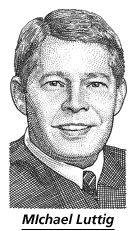
Federal Appeals Court Judge LuttigTapped for Boeing General Counsel

Judge J. Michael Luttig, one of the country's most prominent conservative
jurists and once considered a likely Supreme Court nominee, has resigned from
the Fourth U.S. Circuit Court of Appeals in Richmond, Va., to become senior vice
president and general counsel for the Boeing
Co. in Chicago.


Last year, as two vacancies appeared on the U.S. Supreme Court, Judge Luttig was
widely reported to be on the White House short list, and his candidacy was
touted by former clerks who had gone on to influential positions in the current
Bush administration. But the positions ultimately went to two fellow alumni of
the Reagan Justice Department, Chief Justice John Roberts and Justice Samuel
Alito. People close to the selection process said that it was unlikely President
Bush would consider Judge Luttig for any future vacancies, as political
imperatives all but precluded nomination of another white male for the high
court.

Luttig was/is one of the biggest icons of the Federalist Society/conservative judicial philosophy. It appears that, seeing his best chances for the high court gone, he has decided to go in another direction. I have no idea if that is his actual motivation - but it is a reasonable possibility. In any case, it's a terribly interesting decision. And a BIG shock.